Most organizations know they need security awareness training. The harder question is how to roll it out so it actually changes behavior instead of becoming an annual checkbox. This guide walks through the seven steps of a successful implementation, from securing leadership buy-in to embedding training in policy.
What does implementing security awareness training involve?
Implementing security awareness training means setting up a continuous program that educates employees to recognize and avoid cyber threats, measures how their awareness develops, and adapts training to close the gaps. A typical implementation follows seven steps:
-
Get buy-in from the top down
-
Perform a gap analysis
-
Schedule regular, consistent training
-
Review training performance
-
Deploy periodic phishing simulations
-
Educate people who fail simulations
-
Implement policy processes
The reason this matters is well documented. According to the Verizon 2025 Data Breach Investigations Report, roughly 60% of breaches involve the human element, and IBM's Cost of a Data Breach Report puts the average cost of a breach at close to 5 million USD. Technical defenses like firewalls and endpoint protection take you far, but they cannot cover the decisions people make in their inbox every day. That is what security awareness training is for.
Here is how to implement it, step by step.
Step 1: Get buy-in from the top down
A training program only works if the whole organization takes part. That means executives, middle management, employees, and anyone else with access to your systems and data, including contractors and consultants.
Leadership buy-in matters for two practical reasons.
First, budget and mandate: training that is optional gets skipped.
Second, culture: when managers visibly complete the same courses as everyone else, training stops feeling like a compliance exercise.
Form a small security awareness team responsible for the program. Include people from different departments and roles, not just IT. A cross-functional team makes communication easier and helps the program land differently in sales, finance, and engineering, where the threats people face are not the same.
Step 2: Perform a gap analysis
Before you train anyone, find out where you stand. A gap analysis identifies weaknesses in security knowledge and culture before they turn into incidents. It should cover three areas:
Knowledge gaps. Do employees share a baseline understanding of security awareness? Can they spot a suspicious email? Do they know why password hygiene matters? Be honest here. An anonymous survey gives you a clearer picture than assumptions do, and the results tell you which training topics to prioritize.
Vulnerabilities. List the specific exposures your organization faces, such as systems containing personally identifiable information or the absence of a formal security training policy.
Compliance requirements. Regulations like NIS2, DORA, and GDPR increasingly require documented awareness training. Map which apply to you and what they demand. If compliance is a major driver for your program, our compliance page covers how training supports it.
Conclude the analysis with a short report: the gaps you found, prioritized by risk, and an action plan with measurable goals.
Step 3: Schedule regular, consistent training
One long annual session does not build lasting awareness. People forget most of what they learn in a single sitting, and the threat landscape moves faster than a yearly cycle can follow.
Continuous training solves both problems. Short, frequent sessions are easier to complete, easier to retain, and easier to keep current.
Three formats work well together:
Short, interactive courses. Micro-length courses delivered by email, weekly or monthly, that employees can finish when it suits their schedule.
Simulated attacks. Harmless, realistic simulations that let people practice spotting threats in their real working environment. More on these in step 5.
Training built on current, real-world attacks. When a new threat spreads, employees learn about it while it is still relevant, not in next year's course refresh.
Step 4: Review training performance
You cannot improve what you do not measure. From the start, track the metrics that show whether the program is working: completion rates, simulation click rates, and how awareness develops over time. A scoring model like Awareness Level turns those signals into a single measure you can follow month over month, and automated reporting makes it easy to share progress with managers and stakeholders.
Numbers are only half the review.
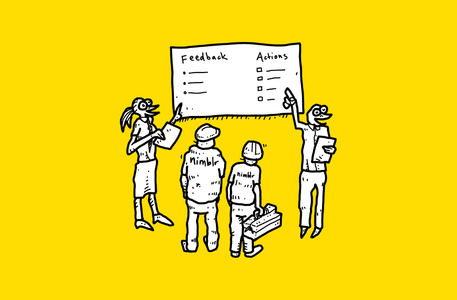
Ask employees for feedback too:
-
Is the training relevant and helpful?
-
Can you complete it when it suits your schedule?
-
Is anything unclear or missing?
-
What would make you more motivated to take part?
Run the same short survey monthly or quarterly so you can compare answers over time alongside your hard metrics.
Step 5: Deploy periodic phishing simulations
Theory only goes so far. Phishing simulations are the practical exercise of security awareness training: harmless emails designed to look like real attacks, sent to your own users. A simulation might imitate a message from HR, the CEO, a delivery service, or the tax authority.
Three practices make simulations effective:
Send them regularly. A single simulation is a snapshot. Recurring simulations keep vigilance up and show you how click behavior develops. Frequency varies by organization, so start with a steady cadence and adjust based on results.
Make them realistic. Simulations should resemble the attacks your people actually receive, matched to your industry and, where possible, to roles. Unrealistic tests teach people to spot tests, not threats.
Pair them with education. Sending a simulation on the same topic shortly before or after a related course shows you whether the training landed.
Beyond training value, simulations give you data: which departments are most exposed, which attack types work best, and which users need more support.
Step 6: Educate people who fail simulations
Someone clicking a simulated phishing link is not a failure of the program. It is the program working: the gap surfaced in a safe environment instead of a real attack.
What matters is what happens next:
Instant feedback. The most effective moment to teach is right after the mistake. When a user is caught by a simulation, a short explanation of what they missed, delivered immediately, turns the slip into a lesson.
Follow-up training. Users who struggle should automatically receive additional short courses on the topics they find hardest, rather than being sent back through generic material.
Support, not punishment. If simulations feel like traps with consequences, people stop reporting real threats. Keep the tone constructive. For users who repeatedly struggle, a short one-on-one conversation works better than escalation.
Step 7: Implement policy processes
The final step makes the program permanent. Write the training cadence, simulation schedule, measurement routine, and responsibilities into your security policy, and brief every stakeholder on the plan for the year ahead.
Work with HR and management to make training mandatory across the organization, including onboarding for new employees so awareness starts on day one rather than at the next scheduled cycle. A program that lives in policy survives personnel changes and budget reviews. A program that lives in one enthusiastic person's calendar does not.
How long does implementation take?
Faster than most teams expect, if the program is automated. The sequence above is not a year-long project plan: buy-in and gap analysis typically take a few weeks, and training and baseline simulations can start as soon as users are onboarded. The cultural results take longer. Awareness builds over months of consistent training, which is exactly why step 3 matters more than any launch date.
FAQ
What are the 7 steps to implement security awareness training?
Get leadership buy-in, perform a gap analysis, schedule regular training, review performance, deploy phishing simulations, educate users who fail them, and embed the program in policy.
Who should be included in security awareness training?
Everyone with access to your systems and data: executives, managers, employees, contractors, and consultants.
How often should employees receive training?
Continuously, in short sessions, rather than in one annual block. Frequent micro-length courses are retained better and can keep pace with new threats.
How do you measure whether the training works?
Track completion rates, simulation click rates, and awareness scores over time, and combine those metrics with regular employee feedback surveys.
What should you do when someone fails a phishing simulation?
Give immediate feedback explaining what they missed, follow up with targeted training on that topic, and keep the tone supportive so people stay willing to report real threats.
Conclusion
Implementing security awareness training is a sequence, not a single launch: secure buy-in, understand your gaps, train continuously, measure, simulate, follow up, and write it into policy. Organizations that follow this approach see real results. With continuous training and realistic simulations, Nimblr customers reduce successful phishing by up to 90%.
More than 5,000 IT decision-makers use Nimblr to run this entire process automatically, from courses and simulations to reporting. If you want to see how an implementation would look in your organization, book a demo.